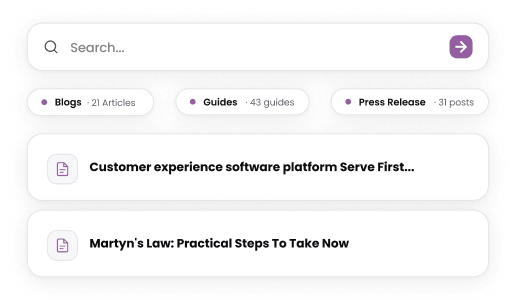


Inconsistent standards
Hold every site to the same standard.
From the shop floor to head office, Serve First connects what customers feel with how each store runs, so you can raise standards and prove they hold, everywhere you trade.


Three connected stages, from check to proof.
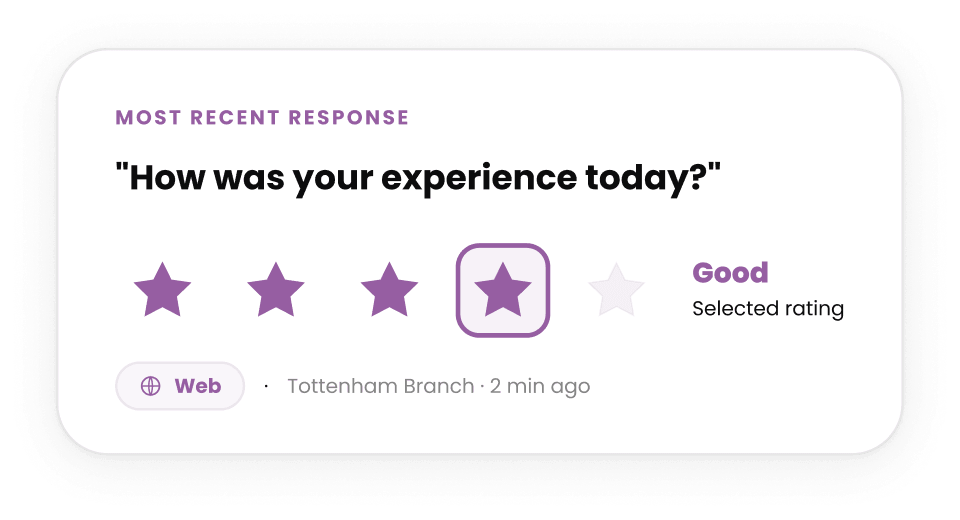
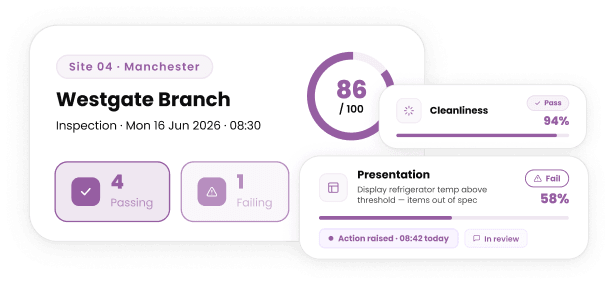
Teams run digital Audits, mystery shopping visits and CSAT checks at every store, recording scores and photo evidence as they go.
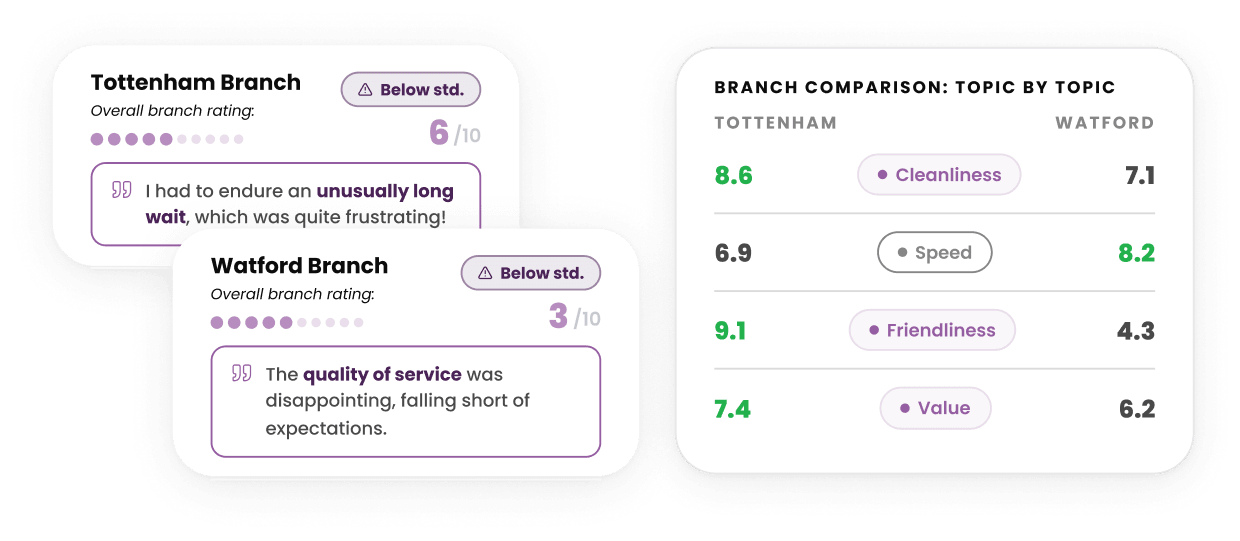
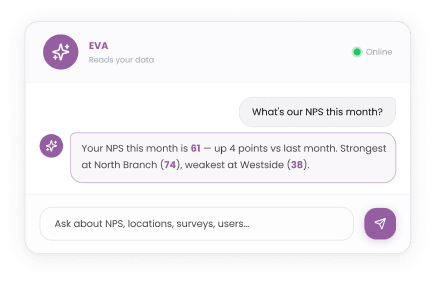
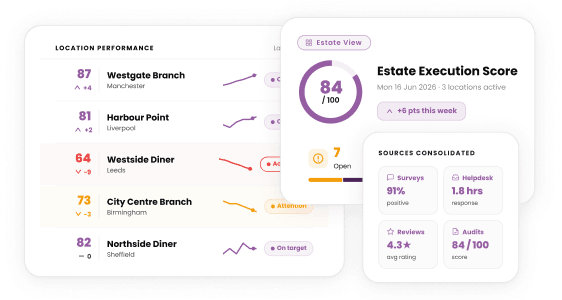
Every store is scored and compared like for like, with EVA flagging which locations are slipping and what is driving it.
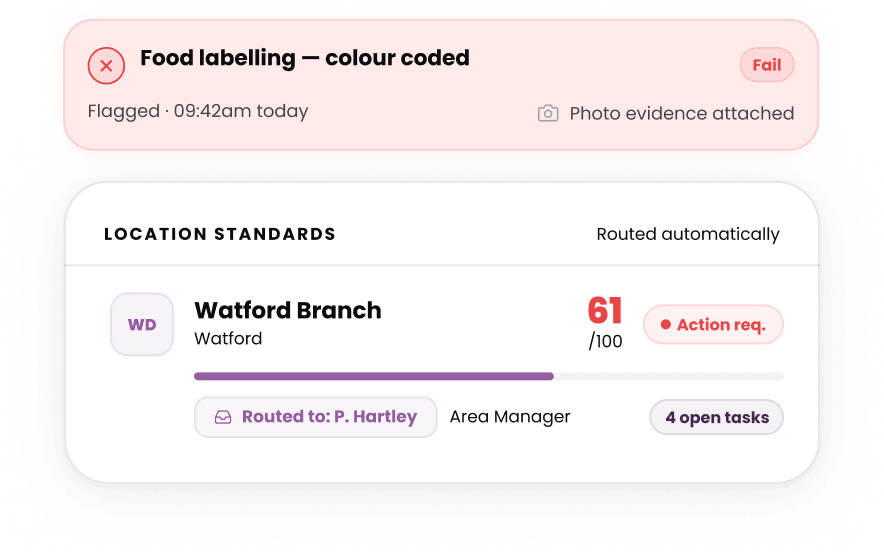
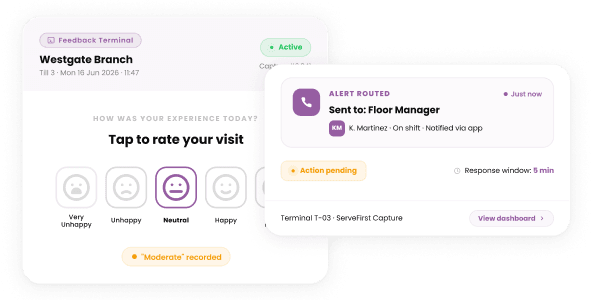
Failed checks raise tasks routed to the right store manager and tracked to done, so the gap closes and the standard holds.
The functions that carry a signal all the way to a fix, connected so nothing stalls.
The outcomes teams see once every signal ends in a tracked fix.
Faster issue resolution
Net revenue retention
ARR growth
Survey response rate
“Serve First has transformed how we manage customer experience, giving us clear insights that have driven tangible results for our business.”

Senior Customer Experience & Training Specialist, The Body Shop
Hold every site to the same standard.

Bring every signal into one picture.

Show the difference with evidence.

Turn each finding into a routed, tracked corrective action.
Retail customer experience software helps multi-store retailers capture customer feedback, audit store standards and turn both into action in one place. Serve First connects what customers feel with how each store runs, then routes every gap to a manager and tracks it to proof of completion, so feedback ends in a fix rather than a report.
Every store runs the same digital audits, scored the same way, so you can compare locations directly and hold them all to one standard. When a store slips, the gap is raised as a task, routed to an owner and tracked to done, so consistency is maintained rather than hoped for.
Yes. Mystery shopping visits and CSAT surveys feed the same operating picture as your audits, so customer perception and store execution sit side by side and EVA can show where one is dragging the other.
Serve First is built for multi-site retail. Every store reports into one operating picture, so head office can rank locations, spot the ones slipping and put them right, however many stores you run.
By connecting what customers say to what each store does. Feedback and mystery shopping show where the experience drops, EVA points to the cause, and the fix is routed to the store and tracked, so the in-store experience improves rather than just being measured.
Yes. Digital audits replace paper and spreadsheets, scores roll up automatically and failed checks raise tasks on their own, so managers spend less time collating and more time fixing, with the evidence captured as they go.