
Business
Retail in summer: how to prepare for the traffic, the queues, and the feedback that follows
School holidays are predictable. Prepare now to handle higher footfall, staffing challenges, and customer expectations this summer.
 Jack Hughes
Price wins a transaction. Experience wins a customer.
Most operations leaders know this instinctively. The evidence has been there for years. But something still pulls businesses toward competing on cost, even when the data says it is the wrong race to run.
The brands that are actually growing, holding share, and building the kind of loyalty that shows up in renewal rates and NPS scores are not the ones that have cut their margins the furthest. They are the ones who have made it their business to understand what customers experience at every touchpoint and then do something about it.
Customer churn is expensive in a way that does not always appear clearly on a P&L. The cost of acquiring a new customer is typically five to seven times higher than the cost of retaining an existing one. A customer who leaves because of a poor experience takes their lifetime value with them, and in most sectors, they tell other people why they left.
But the retention opportunity is not just about stopping people from leaving. It is about understanding which customers are on the edge and why, before they make the decision.
Most businesses find out a customer has churned after it happens. The feedback arrives too late: a cancellation email, a negative review, a dropped contract. By then, the moment to act has passed.
The businesses that are outperforming on retention are the ones that treat customer feedback as a live operational signal, not a lagging indicator. They are capturing sentiment at the point of experience, identifying the patterns that precede churn, and acting on them while there is still time to change the outcome.
Satisfied customers buy more. They return more often, they spend more per visit, and they are more likely to recommend. This is not a soft commercial argument. It is a measurable revenue driver.
Consider a multi-location retail or hospitality business. A location with consistently high customer satisfaction scores will, over time, outperform a location with average scores, even if the two sites have similar footfall and similar pricing. The satisfaction gap shows up in basket size, repeat visit frequency, and word-of-mouth referrals.
But most businesses cannot see this connection clearly because the data sits in separate places. Customer feedback is in one system. Sales performance is in another. Operational standards are in a third. Nobody is joining the dots.
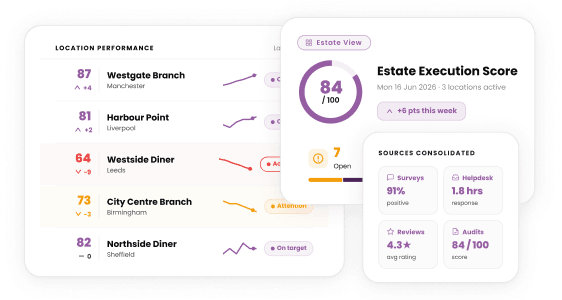
When you can connect customer experience signals to location-level operational performance, something important becomes visible: the locations that score poorly on customer satisfaction almost always have identifiable operational problems behind them. A staffing issue. A standards gap. A recurring complaint that has never been resolved because nobody escalated it properly.
That connection, between what customers experience and what is actually happening operationally, is where the revenue opportunity lives. Fix the operational problem, and the customer experience score improves. The satisfaction score improves, and the retention and revenue metrics follow.
Poor customer experience is not just a revenue risk. It is a reputational risk that compounds over time in ways that are difficult to recover from.
Online reviews have fundamentally changed the economics of reputation. A customer who had a poor experience at one of your locations does not just tell ten people. They publish it, and it stays there. A pattern of negative reviews, particularly on Google or sector-specific platforms, affects new customer acquisition long after the individual incidents that caused them.
Most brands are monitoring their online reputation. Fewer have connected that monitoring to an operational response: a process that assigns accountability for resolving the underlying issue, not just responding to the review.
The brands that manage reputational risk well are the ones that treat a negative review as an operational signal, not just a PR problem. They look at the feedback, identify the root cause, assign a fix, and confirm it has been done. Then they check whether the same issue is appearing at other locations, because a problem at one site is often a signal of a systemic gap.
It is tempting to treat customer experience as a front-of-house discipline: train your staff to be friendly, manage complaints well, and the rest follows.
That is necessary but not sufficient.
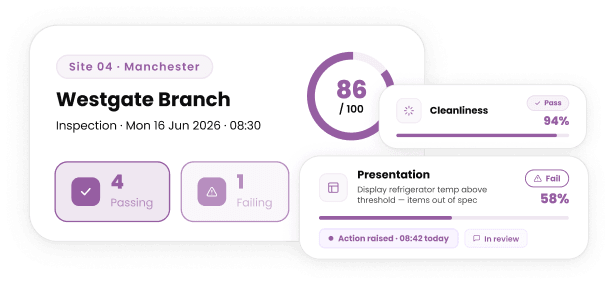
Exceptional, consistent customer experience across multiple locations requires operational excellence as its foundation. The customer experience is not shaped by the welcome they receive at the door. It is shaped by every operational decision made before they arrive: whether the location is clean, whether the team is properly trained and staffed, whether standards are being followed, and whether complaints from last week have been resolved.
Brands that understand this treat customer feedback and operational performance as two sides of the same coin. They do not separate CX measurement from operational management. They connect them so that the customer signal informs the operational response, and the operational improvement shows up in the next round of customer scores.
That is how exceptional customer experience becomes a repeatable capability, not a lucky streak at one well-run location.
The businesses setting the standard in customer experience right now share a few common characteristics.
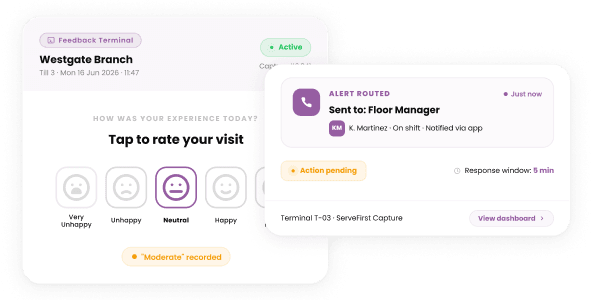
They capture feedback at the point of experience, not two weeks later in a survey nobody completes. They act on it quickly, with clear ownership and proof of completion. They can see patterns across locations, not just results at a single site. And they connect the customer picture to the operational picture, because they know the experience is created by operations, not despite it.
The businesses that are still treating customer experience as a quarterly report, a mystery shopper score, or a set of review responses managed by the marketing team are falling behind. Not because the data is not there. Because the data is not connected to action.
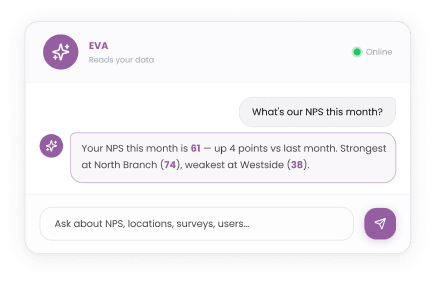
Serve First gives multi-location businesses the platform to capture every customer signal, understand what is really happening across their locations, and act on it before it becomes a retention or reputation problem.
School holidays are predictable. Prepare now to handle higher footfall, staffing challenges, and customer expectations this summer.

AI-powered audit software is transforming compliance, helping businesses reduce risk, streamline audits, and improve performance in real time.

Every event has unique risks. Discover how compliance processes can adapt to meet Martyn’s Law requirements across changing venues and audiences.
“Serve First has transformed how we manage customer experience, giving us clear insights that have driven tangible results for our business.”

Senior Customer Experience & Training Specialist, The Body Shop