See it on your sites
A personalised walkthrough with your locations, teams and data.
 Conrad Wilson
Rarely does a single year bring so many converging pressures to bear on one sector. For contract caterers in the UK, 2026 has arrived with a wave of regulatory, economic, and reputational compliance. Operators who fail to adapt risk damage that outlasts any individual contract. These pressures are already taking concrete form. From January 2026, new restrictions under the Health and Care Act 2022 mean that HFSS (high fat, salt and sugar) products face tougher advertising controls, with a complete ban on paid online advertising and no broadcast promotion before the 9pm watershed. The Labour Government has already banned unlimited sugary drink refills across hospitality venues in England, and Scotland is expected to follow in autumn 2026, with further restrictions on product placement and promotion coming to Wales. At the same time, the Employment Rights Act is introducing new compliance obligations, and UK operators trading with the EU are now subject to deforestation reporting requirements, adding complexity to supply chain management. This is not a manageable trickle of change. It’s a genuine step-change in the regulatory environment, arriving at the exact time contract caterers must confront persistent food inflation and mounting consumer anxieties. IGD forecasts food inflation will average 3.8% in 2026, only a marginal improvement on 2025. Simultaneously, 84% of consumers expect their tax bills to rise this year (IGD Shopper Confidence Index), and 81% are deeply concerned about the cost of eating out. The conditions for maintaining both margin and standards are uniquely demanding, and the pressure is relentless. In light of these challenges, how are the strongest operators responding?
The food safety and quality infrastructure that most contract catering businesses rely on was designed for a steadier regulatory environment. HACCP plans, scheduled hygiene audits, annual brand reviews, and periodic mystery-dining programmes remain foundational tools, but their effectiveness depends on stability. In today’s unpredictable, high-stakes landscape, the urgency to adapt these tools to rapid change is immediate and undeniable. That cadence has broken. Material regulation shifts every few months, while the economic context changes weekly, making periodic compliance audits obsolete and dangerously slow in today’s landscape. An audit reveals only a fleeting snapshot; it cannot match the pace or seriousness of the moment. What happens in the weeks before or after is now where real risk accumulates and multiplies, demanding unbroken vigilance and immediate action. This is the compliance gap: a persistent blind spot between the audit’s brief snapshot and the dynamic, daily reality across a site network, a gap that now represents significant, urgent risk in this climate. In a high-compliance environment, this gap has real consequences. A caterer whose menu still features promotional messaging for HFSS products in violation of the new restrictions faces regulatory exposure, not just reputational risk. A site that is nominally compliant with allergen labelling requirements but whose staff haven’t been retrained following a recent menu change is a liability, regardless of what the last audit said. The gap between the documented position and the lived reality is where contract exposures live.
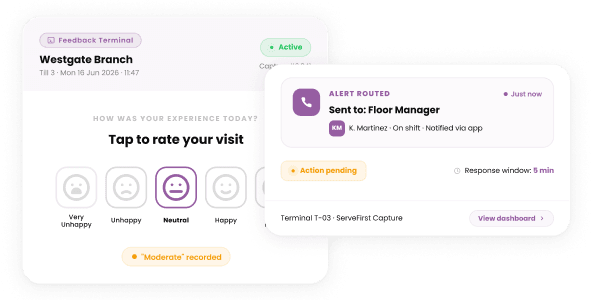
The operators responding most effectively to the current environment are those who have abandoned periodic compliance in favour of what practitioners now call a continuous compliance posture. This shift is not optional; it is an urgent necessity for survival in today’s volatile compliance landscape. Periodic compliance says: we will audit, find the gaps, and remediate. Continuous compliance says: we will maintain ongoing visibility, detect drift before it becomes a formal finding, and demonstrate standards as a matter of course rather than a crisis-driven response. Practically, this means several things. Mystery dining and brand audit programmes should operate at a higher frequency, as rolling, always-on mechanisms that sample standards across the network. Insight from a single mystery dining visit is useful. Patterns from fifty visits over six months, correlated with site characteristics, contract type, and staff tenure, provide real operational intelligence. It means building feedback infrastructure at the point of service, capturing the diner’s experience in the moment. This is more immediate than waiting days for a client satisfaction survey. Feedback terminals in canteens, education, and healthcare settings often achieve response rates ten to fifteen times higher than post-visit email surveys. The data is real-time, unfiltered, and granular enough to reveal if complaints cluster around a station, shift, or day. It also means using brand audit data for more than just compliance checks. Instead, use it as an ongoing baseline. This provides quality leadership with visibility to maintain consistency across many sites before issues reach the client’s attention.
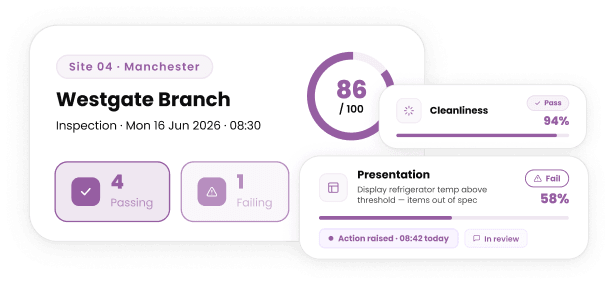
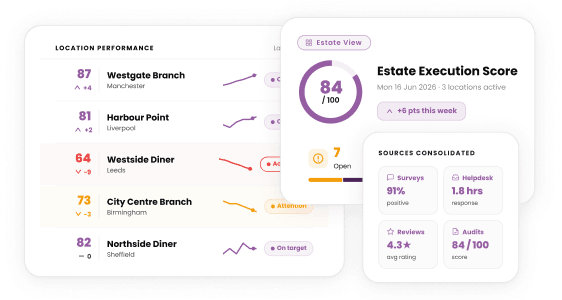
None of this is achievable at scale through manual processes. The volume and frequency of data required to maintain a genuinely continuous quality picture across a medium- or large-scale contract catering estate demand technology infrastructure, and in 2026, that infrastructure is accessible, operationally mature, and no longer the exclusive preserve of the largest national players. Digital audit trails are replacing paper checklists. When compliance evidence is captured digitally with timestamps, photographs, and automatic escalation paths for out-of-tolerance findings, the audit becomes a living document rather than a periodic report. This matters enormously in the current regulatory climate, where the ability to demonstrate HACCP compliance, allergen management, and nutritional labelling accuracy is not a retrospective exercise but a continuous operational discipline.AI-powered sentiment analysis is being applied to feedback captured at the point of service. When unstructured comments from diners are processed at scale, patterns emerge that structured rating scores alone don’t surface: recurring concerns about food temperature at a particular time of day, emerging complaints about clarity of allergen information, and positive sentiment clustering around specific menu items or service styles. These signals inform both immediate operational response and longer-term menu and service design. Real-time dashboards give quality managers and operations directors a network-wide view that updates continuously, rather than a static report from last quarter. When one site is trending downward in food quality scores while the rest of the estate holds steady, the question becomes worth investigating before a client raises a formal concern and before a regulator does the same.
To implement continuous compliance effectively, take these key steps: 1. Conduct a rapid compliance gap assessment. Map your current practices against new regulations (HFSS advertising rules, sugary drink restrictions, allergen labelling). Use findings to focus brand audit efforts on the highest-risk areas. 2. Increase the frequency of mystery dining visits at the highest-variability sites. Multi-site catering networks almost always have a performance distribution, some sites that consistently meet standard, others that consistently fall short, and a broad middle that varies by day, by team, or by service period. Concentrating higher-frequency quality visits at the volatile middle delivers the most marginal improvement per pound spent. 3. Introduce real-time feedback systems at high-risk client sites. Share live quality data with clients to strengthen trust and allow prompt response to issues.Build escalation paths that get findings to people who can act the same day. The most common failure mode in quality programmes isn’t insufficient data, it’s insufficient routing. A site that receives a cluster of negative feedback about a food safety indicator on a Tuesday needs that signal to reach the site manager and the area manager by Wednesday, not the regional quality review three weeks later.
The compliance wave of 2026 will not treat all contract caterers equally. Operators who can demonstrate to clients with evidence, not assertion, that their food standards are consistently maintained across every site, that their compliance posture reflects the current regulatory environment (not the one from two years ago), and that their diner experience is continuously monitored and managed, are building competitive credentials that are increasingly difficult to replicate. The commercial logic matters as much as the compliance logic. In a market where clients are acutely aware of their own regulatory exposure and reputational risk, a contract catering partner who can offer continuous quality visibility is not just a service provider; they’re a risk management asset. And in a period when food inflation is compressing margins and value-conscious diners are scrutinising every meal choice, the caterers who can evidence quality consistently are the ones who earn the right to hold their pricing.Serve First works with contract catering and food service operators to build the compliance monitoring, brand audit, and diner feedback infrastructure that makes continuous quality management possible at scale. Get in touch to see how our customer experience platform supports food standards programmes.

Senior Customer Experience & Training Specialist, The Body Shop


