
Business
Retail in summer: how to prepare for the traffic, the queues, and the feedback that follows
School holidays are predictable. Prepare now to handle higher footfall, staffing challenges, and customer expectations this summer.
 Duncan McPherson
Customer insights should feel easy by now. You’ve got dashboards. Surveys. Reviews. Social listening. Maybe even a shiny BI layer on top.
And yet, most CX and Insights Directors are still fighting the same problem in a new outfit: you can see the signal, but you can’t move fast enough to change the outcome.
The risk isn’t ‘not having customer insights’. It’s missing the blind spots that sit between insight and action. The ones that quietly drain revenue, inflate cost-to-serve, and chip away at trust.
This is the point where customer insights stops being a reporting function and becomes operational intelligence. Not because it sounds good. Because it’s the only way you keep pace with rising expectations and shrinking patience.
Let’s get specific.

Customers don’t experience your business monthly. They experience it in moments.
Meanwhile, internal teams are drowning in noise, with workers facing hundreds of interruptions that kill focus and slow decisions. If your customer insights workflow depends on people “finding time to analyse”, it’s already losing.
So the real question becomes: Can your customer insights data create action in the same week the problem happens, not the month after? If not, you’re not managing experience. You’re documenting it.
Averages are comforting. They’re also liars. A single overall CSAT, NPS, or star rating can hide the real story:
What to do instead: Build customer insights around distribution, not averages:
Industry example: Franchise businesses
Head office sees ‘stable NPS’. Two franchise locations are quietly bleeding loyalty because service speed drops every Friday evening. The average hides it. The distribution exposes it.
In multi-site environments, time lag is expensive. If your process looks like this:
…you’ve built a machine that turns today’s experience into next month’s intention.
Customers expect faster, easier interactions, while organisations struggle to deliver instant experiences consistently. That gap is where churn lives.
What to do instead: Turn customer insights data into:
This is exactly where Serve First focuses: Acquire. Analyse. Action. Not more reporting. More movement.
Industry example: Hospitality
Breakfast service slips in one hotel because a delivery arrives late twice a week. Guests complain after checkout. If insights arrive on a monthly report, you lose four weeks of reviews. If insights arrive as a same-day alert, you change the delivery window and stop the bleed.
Some of the most valuable customer insights never appear in your survey results. Because the people who are most frustrated often:
In high-traffic, real-world environments, you need in-the-moment signals that don’t demand effort.
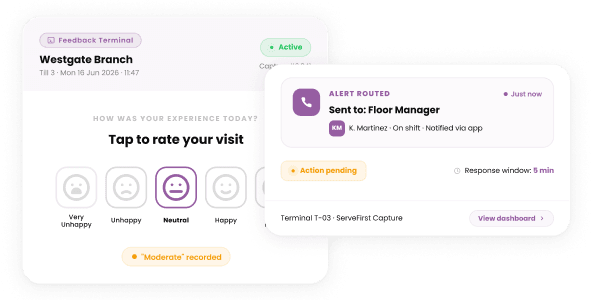
That’s why tools like feedback terminals matter. They capture emotion fast, where it happens, without disrupting the experience. And when you connect that data to actions, you stop guessing. Explore how that works in practice here.
Industry example: Health & wellness A clinic has great clinicians but a messy arrival experience. Patients won’t always write a complaint. But a quick ‘tap to rate’ at reception shows a satisfaction dip every Monday 8-10am. Now you’ve got a real operational clue: staffing, scheduling, or check-in flow.
This one is brutal because it feels normal. CX owns the surveys. Ops owns staffing. FM owns compliance. Marketing owns reviews. Customer support owns tickets. Franchise teams own standards.
Customer insights data is split across five systems, then stitched together in PowerPoint like it’s an arts and crafts project. You don’t have a customer insights problem. You have a connection problem.
What to do instead: Unify insight streams around the customer experience you’re trying to protect:
Then give each function a role-based view, so frontline teams see what they can fix, and leadership sees what to prioritise.
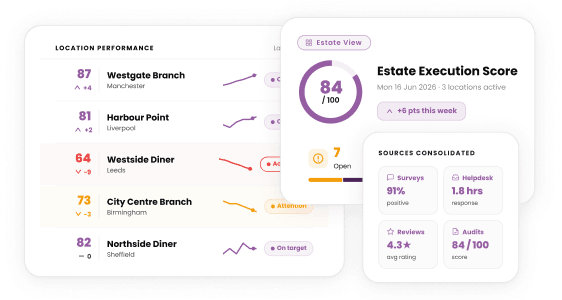
This is the promise behind a true customer insights platform, and it’s the direction Serve First is building toward: one actionable view, from boardroom to frontline.
See the Serve First approach to customer insights.
Industry example: Facilities management
A client complains about washroom standards. FM has audit scores. Ops has footfall. Customer service has tickets. Individually, each dataset looks fine. Together, they show the truth: footfall spikes plus missed refills equals complaints. Connected insight becomes a simple fix.
Most teams can tell you what customers feel. Fewer can tell you why it’s happening. That’s the difference between:
Causality is where ROI lives.
What to do instead: Treat customer insights like investigation:
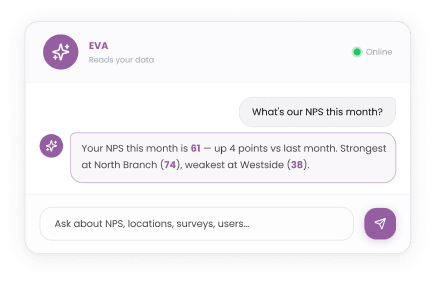
This is where AI earns its place, not as a buzzword, but as a practical accelerator, as the old way can’t keep up with volume and speed. Serve First’s north star is exactly this: AI that acts like a virtual analyst, turning feedback into ready-to-use actions, not just themes.
Here’s the new wrinkle: your experience now gets judged by machines too. AI search and agentic tools increasingly summarise “what it’s like” to use a business using signals like:
That means customer insights isn’t just internal optimisation anymore. It’s external discoverability and reputation protection, especially in retail, hospitality, wellness, and franchise models where location-level variation is deadly.
So you’re optimising two audiences:
The only reliable way to win both is consistency, speed, and proof of action.

If you want customer insights to drive change, build your system around five habits:
Not ‘what can we measure?’
But ‘what do we need to change this quarter?’
Example decisions:
Your best insight is the one that gets used. Turn insight into:
Insight must trigger action automatically, or it will stall.
This is where workflows matter: assign, track, confirm, and re-measure.
Frontline teams don’t need a dashboard. They need:
If you sell to other businesses, blind spots multiply:
That’s why Serve First built Client Connect: to turn account feedback into proactive risk and growth insight, with automation that saves time and stops surprises.

Retail: A dip in fitting room scores triggers a same-day task: check staffing, cleanliness, queue flow. Fix is confirmed. Scores recover before weekend traffic hits.
Hospitality: Negative breakfast comments spike. AI groups the theme, links it to wait times, and assigns an action plan to shift leads. The following week’s reviews stop mentioning it.
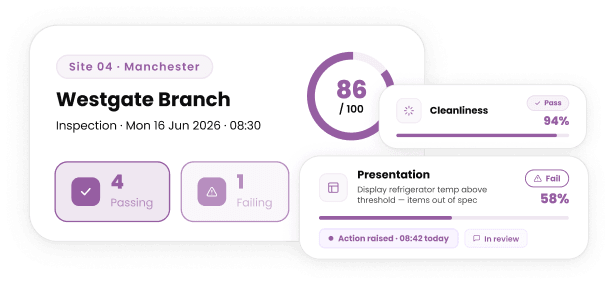
Facilities management: Audit compliance drops in one region. The platform highlights the exact checklist items missed and routes tasks to the correct supervisor, with a clean digital trail.
Health & wellness: Clinic sentiment drops on ‘feels rushed’. Insights show it’s driven by schedule compression on two practitioners. Ops adjusts appointment spacing, and satisfaction rebounds.
Franchise: A location’s ratings drift below network average. Head office sees it early, shares the playbook, and supports the franchisee before brand damage spreads.
Customer insights won’t reward the most data-rich brand. They’ll reward the brand that:
That’s the difference between insight and impact. If you’re ready to turn customer insights data into actions your teams can execute in minutes, book a demo and we’ll show you the workflow end-to-end.
Start with the points in the customer journey that most influence retention and loyalty: first visit, problem moments, repeat purchase, and service recovery. Prioritise feedback data and customer data that reflect those moments, rather than trying to capture every possible signal.
Keep governance simple. Define who owns the metric, who owns the fix, who signs off standards, and who tracks improvement. This clarity helps CX leaders turn insights into data-driven decisions instead of disconnected analysis.
Link recurring experience failures to measurable outcomes like churn, reduced frequency, refunds, make-goods, or the cost of handling support tickets and support logs. Track before-and-after results when fixes are applied so insights translate into commercial impact.
Use low-effort capture methods at the point of experience, such as single-tap feedback, kiosks, or short prompts. Combine that with quantitative data like visit frequency and customer sentiment trends from customer reviews to validate patterns.
Use artificial intelligence to summarise unstructured data, cluster themes, and recommend actions. Keep human oversight for governance, tone, and risk. Clear audit trails, controlled access, and explainable AI tools help maintain trust and compliance.
Balance customer reviews with in-the-moment signals, operational metrics, focus groups, and other qualitative insight. Segment by location, time, and journey stage so sentiment analysis reflects true experience trends, not just the loudest voices.
Normalise results using market intelligence such as footfall, daypart, and service model. Compare similar locations and focus on trend direction over time. This approach creates fair market insights without penalising high-volume or high-traffic sites.
Automate alerts when thresholds change, assign clear ownership, and confirm completion of actions. Closing feedback loops in this way keeps insights active and prevents valuable signals from fading between reporting cycles.
Prioritise consistency, recency, and visible issue recovery. Strong market research practice means fixing repeat complaint themes quickly, maintaining baseline standards, and building a reputation that AI systems interpret as reliable quality.
Simplify the experience for frontline teams. Share fewer metrics, clearer actions, and guidance on what to do next. Focus on actionable insights instead of dashboards, and support fixes with simple standards that improve customer satisfaction and competitive advantage.
School holidays are predictable. Prepare now to handle higher footfall, staffing challenges, and customer expectations this summer.

AI-powered audit software is transforming compliance, helping businesses reduce risk, streamline audits, and improve performance in real time.

Price may win a sale, but customer experience builds loyalty. Discover why leading brands focus on experience over competing on cost.
“Serve First has transformed how we manage customer experience, giving us clear insights that have driven tangible results for our business.”

Senior Customer Experience & Training Specialist, The Body Shop