
Business
Retail in summer: how to prepare for the traffic, the queues, and the feedback that follows
School holidays are predictable. Prepare now to handle higher footfall, staffing challenges, and customer expectations this summer.

A business can collect feedback from five different places and still miss the one pattern costing them customers. Reviews land on one platform. Terminal comments sit in another. Mystery shopping reports go to a different inbox. Staff observations rarely make it past a shift handover. Each channel might work well on its own but none of them talk to each other.

More feedback channels should mean more insight. In practice, it often means less, because there’s nothing joining the dots.
This isn't an admin inconvenience. It's a revenue leak. And like most leaks, it's quiet. It doesn't show up as one dramatic failure. It shows up gradually, in falling repeat visits or a slow drift in churn nobody can trace back to a cause.
The cost of fragmented feedback isn't in collecting it. It's failing to connect it.
Why customer feedback management fails when channels don't talk to each other
Most operators are not short of feedback. They are short of a way to see it all at once. That is where customer feedback management usually breaks down, not in the collection, but in the connection.
The channels feeding your customer feedback management approach
A typical multi-site business is already pulling feedback from:

Each channel usually works fine in isolation. The terminal data is accurate. The mystery shop report is thorough. Online reviews management is often somebody's actual job. The failure isn't in any single channel. It's in what happens, or doesn't happen, between them.
Each one has its own owner, its own reporting rhythm, and its own way of describing the same issue. A slow service complaint on Google reads nothing like a slow service flag on a mystery shop scorecard, even when they're describing the same problem at the same site. Without a shared customer feedback system pulling all of it into one place, nobody is positioned to spot that.
Around 93% of consumers say they read online reviews before making a purchase decision, which means the reviews channel alone carries real commercial weight. But treating that channel as separate from what's happening in-venue means you're only ever seeing part of the picture, and reacting to the part that's already public.
The hidden cost of disconnected customer feedback management
When feedback stays fragmented, the cost shows up in four specific ways.
What poor customer feedback management is quietly costing you
None of this needs a single dramatic failure to matter. Research shows that 73% of consumers will switch to a competitor after multiple bad experiences, and by definition, "multiple" means the warning signs were there before the customer left. Poor customer service is estimated to cost UK companies £7.3 billion a month, concentrated heavily in sectors, like retail and hospitality, that also run the highest volume of fragmented feedback channels.

The maths on retention backs this up from the other direction too. A 5% reduction in customer churn can lift profits by 25% to 95%, depending on the industry. Keeping a customer costs far less than replacing one, but you can only keep them if you know something's wrong before they've already decided to leave.
What unified customer feedback management looks like
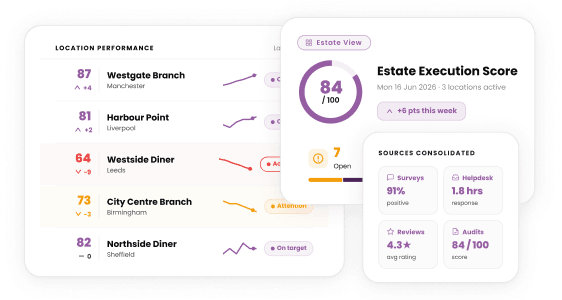
Unified customer feedback management means every channel feeds into one place, using a shared structure, so issues can be correlated rather than reviewed in isolation.
In practice, that changes each of the problems above. A complaint on a review site and a similar flag from a feedback terminal get recognised as the same issue, not two unrelated ones. Teams can see a trend forming across sites while it's still small, rather than after it's already cost repeat business. Response happens faster, because there's no manual step to check whether an issue is part of a wider pattern.
How a customer experience platform brings it together
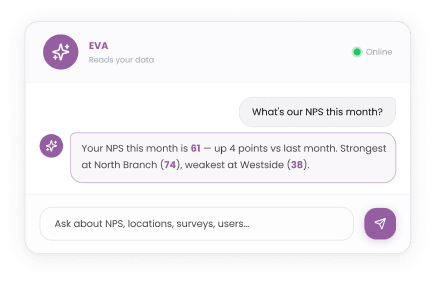
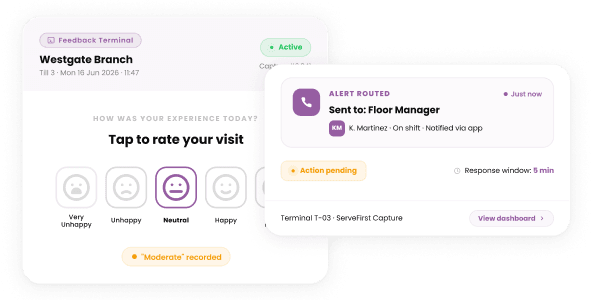
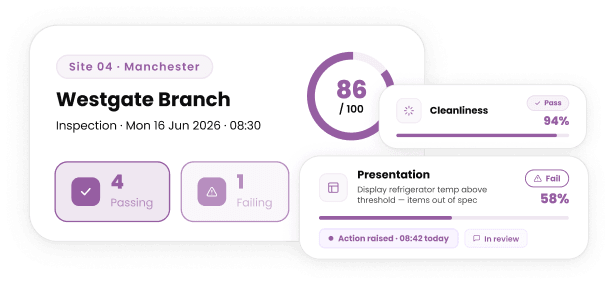
This is close to how Serve First's capture, analyse and action model works in practice. Capture brings in feedback from every channel, not just the loudest one, including online reviews management alongside terminal and mystery shopping data. Analyse will surface correlation and pattern across sources and sites. Action makes sure the insight reaches the person who can actually do something with it.

Spotting a pattern across thousands of data points, across channels and sites, is exactly the kind of task that benefits from AI doing the heavy lifting. Not as the headline, but as the part that frees people up to focus on the response, not the detection. A proper customer experience platform doesn't just store more feedback. It makes the feedback you already have usable.
Practical steps to fix your customer feedback management approach
You don't need a new system to start closing the gap. Start with what you already have.
The bottom line on customer feedback management
Fragmented feedback isn't a "not enough data" problem. Most businesses are already collecting plenty. It's a connection problem. The cost isn't visible in any single channel. It shows up in the customers who don't come back, and by then, it's too late to trace exactly why.
The businesses getting ahead aren't collecting more feedback. They're connecting what they already have.
Talk to us to see how that works in practice.
A personalised walkthrough with your locations, teams and data.
School holidays are predictable. Prepare now to handle higher footfall, staffing challenges, and customer expectations this summer.

AI-powered audit software is transforming compliance, helping businesses reduce risk, streamline audits, and improve performance in real time.
Price may win a sale, but customer experience builds loyalty. Discover why leading brands focus on experience over competing on cost.
“Serve First has transformed how we manage customer experience, giving us clear insights that have driven tangible results for our business.”

Senior Customer Experience & Training Specialist, The Body Shop
“Serve First has saved us hours that we’ve put straight back into opening more stores. It’s one platform for everything so all our data is connected.”
Head of Operations, The Sushi Co