Customers crave reliability. Whether they drop into a café in London or a pub in Manchester, they expect the same level of service, ambience, and quality from a familiar brand.
For multi-site F&B operators, delivering uniform experiences across dozens or hundreds of locations isn’t just about brand standards; it’s about protecting the KPIs you’re measured on.
When guest satisfaction scores drop at one site, your entire portfolio’s trading performance suffers. In the competitive UK food and beverage sector, delivering a consistent customer experience (CX) across all locations isn’t just a nice-to-have; it’s essential for building trust and loyalty.
Why consistency transforms customer experience
The fact is, customers don’t just crave great food; they crave reliability. When they choose a familiar brand, they’re banking on a promise. The same quality, service, and atmosphere, every single time. This uniformity builds trust. Trust drives loyalty. Loyalty fuels growth.
Good service outweighs even food quality or value as the strongest driver of customer satisfaction in UK casual dining. Consistency transforms one-time visitors into dependable advocates who champion your brand without being asked.
Yet maintaining that uniform excellence across hundreds of locations and thousands of employees? That’s where the challenge begins.
The sweet spot: Balancing standards with local flavour
No two locations are identical. Different communities bring different expectations. The tension between standardisation and localisation is real, but it’s also solvable.
Smart brands define their non-negotiables: the core elements that never vary. Then they leave room for local adaptation, so each outlet connects authentically with its neighbourhood. A historic town might appreciate décor nods to local heritage. Scottish diners might want slightly different menu emphases than Londoners.
Standardising service: The foundation of consistency
Leading chains script the customer journey with precision. From the moment a guest walks in to the moment they leave, every interaction follows carefully defined steps of service. These aren’t restrictive rules. They’re the foundation of exceptional experiences.
Staff training is pivotal. Every employee should know and embrace service standards. Top chains prepare teams for common scenarios, including incorrect orders, allergy inquiries, and birthday celebrations. They empower front-line employees to resolve issues swiftly within guidelines.
Pret A Manger takes this further. They won’t hire anyone who doesn’t showcase their desired traits: fun, genuine energy. Prospective employees work a trial day, and only those who show the right attitude and win approval from existing team members get hired. Walk into any Pret in the UK, and you’ll feel it immediately. Whether you’re in London, Manchester, or Edinburgh, the experience is unmistakably Pret. That’s no accident. It’s the result of obsessive attention to consistency at every guest touchpoint.
Creating cohesive atmosphere: sensory consistency matters
Consistency extends beyond human interaction. The physical environment e.g., lighting, temperature, music, décor, all shape the brand identity just as powerfully.
Décor reinforces brand identity at every turn. PizzaExpress features open kitchens and black-and-white striped motifs. Pret displays signature burgundy-and-white branding and chalkboard menus.
Yet there’s room for local touches. Nando’s decorates each restaurant with unique South African artwork inspired by the local community. Wetherspoon famously renovates pubs in unique historic buildings, allowing each site’s character to shine.
What gets rewarded gets repeated: Driving standards through measurement
Standards only stick when you monitor performance and reward excellence. Mystery shopper programmes provide objective measurement across sites. Pret’s weekly anonymous visits score each shop on service quality, cleanliness, and product preparation. High scores trigger team bonuses for everyone working that week. When the entire team’s reward depends on delivering excellent service, consistency becomes everyone’s priority.
Beyond mystery shoppers, chains use customer feedback and data to measure performance. PizzaExpress uses analytics to track guest feedback across all restaurants, identifying underperforming locations immediately so area managers can intervene before issues compound. Digital loyalty programmes, such as their mobile app, create continuous feedback loops that increase the stakes for consistency.
Nando’s Peri-Perks loyalty card works similarly. Staff consistently remind customers to scan their cards, even during busy periods. This small gesture shows consistent customer care and reinforces positive experiences.
The takeaway: Consistency builds lasting loyalty
Keeping customer experience consistent across a chain requires clear procedures, regular training, consistent monitoring, and strong leadership.
When every location hits the right notes, guests feel comfortable choosing that brand again and again. Consistency fosters consumer trust, boosts brand reputation, and promotes client loyalty, driving better financial performance.
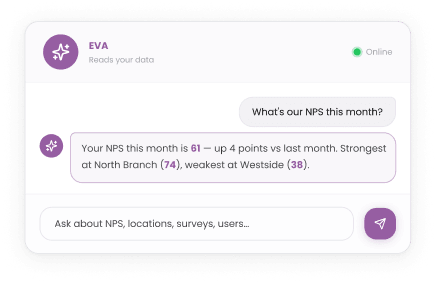
At Serve First, we solve this operational challenge. Our AI-powered platform consolidates every feedback stream, guest terminals, mystery shoppers, online reviews, and site audits into one intelligent dashboard. But we don’t stop at showing you what’s wrong. Our AI translates complex data into specific actions pushed directly to site-level teams.
For operations and CX leaders managing hundreds of sites, this changes everything. You move from reactive firefighting to proactive management. You spot the service slip before it becomes a pattern affecting regional performance.
Consistency drives loyalty, and we’re here to help you make that happen.