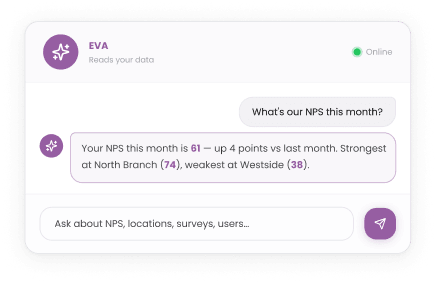

What is MCP? Ask Copilot, ChatGPT or Claude about your Serve First data
Use the Serve First MCP connector in Microsoft Copilot, ChatGPT or Claude. Ask about ratings, NPS, audits, mystery visits and help desk in plain English.
 Erol Ayvaz

A strong customer experience journey is no longer a “nice to have”. It’s the battleground where brands win or lose loyalty, reputation, and revenue. Customers remember how you made them feel, and they vote with the exit door when experiences fall short.
Yet while most organisations agree that customer experience matters, far fewer have a clear and practical framework for improving it. Feedback gets collected. Reports get created. Dashboards look impressive. But real change? That’s where many strategies stall.
So, what is customer experience, really? And how do you move beyond measurement to build a customer experience strategy that actually works from insight to impact?
Here, we’re going to explain how you can design a customer experience framework that delivers tangible results. One that captures feedback in the moment, turns insight into action, and empowers everyone - from the frontline to the boardroom - to improve on what matters most.

Customer experience is the sum of every interaction a customer has with your brand. Every visit. Every conversation. Every emotion. It spans physical locations, digital channels, service interactions, and everything in between.
But customer experience doesn’t improve by itself.
Without a framework, businesses often fall into familiar traps, such as:
A strong strategy customer experience plan consists of structure, direction, and clarity. It ensures feedback isn’t just heard - it’s acted upon. It connects insights to behaviour change. And it turns customer data into a competitive advantage.
Here at Serve First, we understand that an effective customer experience framework is built around a simple but powerful principle:
Capture. Analyse. Action.
This approach ensures every piece of feedback fuels improvement, not frustration.
Let’s break it down step by step.

The most valuable customer experience insights are captured in the moment, when emotions are fresh and experiences are still taking place.
Relying solely on delayed surveys or annual research creates blind spots. When asked for after-the-moment feedback like this, customers can no longer give the same detailed and helpful insight they could have given at the time of their experience - the insight you need. Then the opportunity to fix the issue, or reinforce what worked, has passed.
High-performing customer experience strategies focus on real-time, contextual feedback, including:
These methods remove friction for customers and deliver insight at the exact point where the experience is shaped.
By capturing feedback across locations, channels, and moments, businesses can monitor their customers’ journeys in real time - not just through snapshots taken weeks or months later.
To learn how Serve First can help you and your business gain customer feedback in the moments and locations that matter - feedback that delivers true value - head over to our data to action page. Together, we can start turning lost opportunities into insightful goldmines that allow you to actually see where you can make a difference.
Learn more about customer feedback
Collecting feedback is only the beginning. The real challenge is making sense of it - especially when data lives across multiple platforms, teams, and formats.
Disconnected data leads to disconnected decisions.
A strong customer experience framework brings all feedback into one place, giving businesses a single, unified view of how customers actually experience the brand.
By consolidating surveys, sentiment, operational data, and qualitative feedback, organisations gain clarity on:
This is where customer experience shifts from guesswork to confident strategy. This is why a strong strategy customer experience plan matters.
For businesses looking to deepen their understanding of their customer journey and spot meaningful patterns, customer insights play a critical role. At Serve First, we can help you transform raw feedback into clear, actionable intelligence so that your teams can focus on what truly drives customer satisfaction and retention.
Learn more about customer insights
Data volume isn’t the problem. Interpretation is.
Modern customer experience strategies require speed, precision, and focus - and that’s where AI becomes a game-changer.
AI-powered analysis acts like a virtual business analyst, instantly reviewing feedback, identifying trends, and highlighting priorities. Instead of teams spending hours analysing reports, AI surfaces:
This removes noise and confusion, and instead shows a clear direction.
That’s where AI really makes a difference. It doesn’t just explain what is currently happening through data and feedback - it helps teams understand what to do next. That’s the difference between insight and impact.
This is just as true for B2B operations as it is for B2C. Seeing how your business clients are responding to your services, and understanding when and how to act with at-risk accounts, is all about efficiency.
With the kind of AI-driven insights offered by Client Connect, you can gain a clear overview that helps you identify the risk of loss before it happens, improve retention, achieve expansion, and grow revenue - all in one place.
Learn more about Client Connect

Even the best insight is useless if it doesn’t reach the right people.
One of the biggest gaps in customer experience frameworks is accessibility. Frontline teams often lack visibility, while leaders are overwhelmed with high-level metrics that don’t drive behaviour change.
An effective customer experience framework empowers everyone, from upper management to customer-facing staff.
Role-based insights that are given to the appropriate people in a business ensure:
When insights are personalised and easy to understand for everyone involved, action becomes faster and more consistent. Connecting teams around a shared view of the customer experience, and ensuring each team receives the feedback or data that’s most relevant to their area, is what creates alignment - and alignment drives results.
Customer experience doesn’t improve through good intentions alone. It improves through real change.
A strong strategy customer experience plan ensures insights are translated into:
AI-generated recommendations and ready-made workflows remove ambiguity and accelerate execution. Teams know exactly what needs to be done, why it matters, and how to make it happen.
This focus on execution shifts your customer journey improvement operations from a reporting exercise to a functional success.

Closing the loop is where trust is built.
When customers see that feedback leads to visible change, their confidence in your business grows. Their loyalty deepens. And their advocacy increases.
An effective customer experience framework ensures:
But closing the loop isn’t just external. Employees need to see that their actions make a difference too.
By sharing outcomes and progress, businesses reinforce positive behaviours and create momentum for continuous improvement that keeps on delivering.
Customer experience is not a one-off project. It’s an ongoing commitment.
The most successful frameworks focus on continuous learning and adaptation. That means:
By aligning customer experience metrics with business outcomes - such as retention, conversion, and lifetime value - organisations ensure CX remains strategically relevant.
This continuous loop of feedback, insight, action, and measurement keeps the customer experience sharp, effective, and competitive.

Technology enables great customer experience, but leadership sustains it.
True customer experience leaders embed CX into culture, decision-making, and daily operations. They don’t just ask for feedback. They act on it. They empower teams. And they focus on outcomes.
For 20 years, Serve First has helped some of the world’s largest brands transform their customer journeys by fusing technology with humanity. By turning real feedback into AI-powered insight and action, we have repeatedly shown businesses how to move faster, work smarter, and improve on what matters most.
Because in the end, experience is everything.
So, what is customer experience done right?
It’s feedback captured in the moment. Insight delivered without complexity. Action taken with confidence. And a culture where everyone understands their role in serving customers better by the day.
A customer experience strategy that works doesn’t overwhelm teams with data. It gives them clarity, direction, and the confidence to act.
When that happens, customer experience stops being a challenge, and instead it becomes a powerful driver of growth.
Enhance your customer experience today
Customer service is one part of the wider CX strategy. It usually refers to a specific interaction with your customer service team or support team, often at a moment of need.
Customer experience is broader. It covers every customer touchpoint across the entire user experience, including marketing, sales, product usability, digital journeys, and post-purchase engagement.
In simple terms, customer service is a single moment. Customer experience is the full journey. Strong organisations use customer journey maps to connect those moments and design consistent, high-quality human interaction at every stage.
A clear CX strategy helps small businesses compete with bigger brands by improving key customer touchpoints that matter most. When you design intentional, consistent experiences across the user experience, you strengthen loyalty and reduce churn. Tracking satisfaction alongside Net Promoter Score and NPS scores also gives smaller organisations visibility into where they can differentiate. You don’t need a big budget. You need clarity. A focused strategy helps you improve critical moments like first contact, support responsiveness, and post-purchase follow-up, which directly shape retention.
Early improvements often appear within weeks, especially in satisfaction metrics and NPS scores after optimising key customer touchpoints or reducing friction at first contact.
Revenue impact takes longer. As loyalty grows and referrals increase, stronger Net Promoter Score trends begin to influence repeat purchases and long-term retention.
In most cases, measurable financial return emerges over several months as behaviour shifts, repeat business improves, and your customer service team becomes more proactive.
Your CX strategy should be reviewed at least quarterly. Customer behaviours change quickly. New expectations around speed, convenience, and digital access reshape the user experience constantly. Monitoring signals from social listening, sentiment analysis, and support data helps you stay aligned with market shifts. Quarterly reviews allow you to update customer journey maps, refine processes, and ensure your support team is acting on fresh insight rather than outdated assumptions.
Absolutely. Your customer service team shapes daily human interaction, so their clarity, training, and confidence directly affect the customer journey. If employees lack access to actionable insight, your CX strategy stalls. But when teams have clear data, smart workflows, and even supportive AI technology to guide next steps, they can resolve issues faster, especially at first contact. Engaged employees improve consistency across customer touchpoints, strengthening both satisfaction and trust.
Yes. B2B buyers care deeply about responsiveness, reliability, and ease of doing business. Every customer touchpoint, from onboarding to support escalation, shapes long-term partnerships. A strong CX strategy in B2B often combines structured reviews, NPS scores, and insight from sentiment analysis or social listening to track relationship health. When you design the experience around clarity, ownership, and speed, you strengthen trust and reduce churn across the entire account lifecycle.
One common mistake is treating data collection as the strategy. Gathering feedback without activating it won’t improve the user experience.
Other pitfalls include:
A strong CX strategy turns insight into direction. It connects data to clear ownership so teams can improve meaningful human interaction, not just monitor numbers.
A personalized walkthrough with your locations, teams and data.
Use the Serve First MCP connector in Microsoft Copilot, ChatGPT or Claude. Ask about ratings, NPS, audits, mystery visits and help desk in plain English.

You don’t have a feedback problem. You’ve got a timing problem. By the time the monthly survey lands, the moment has gone. The customer has moved on. The review has already been written. The issue has repeated itself across five sites, three shifts, and a weekend rush you’ll never get back.

It is the second week of August. Your hotel is at full capacity. The breakfast queue is running twenty minutes longer than it should. Three rooms are still waiting to be turned by midday. A guest at reception is asking about a maintenance issue that was logged two days ago and nobody has followed up on.
“Serve First has transformed how we manage customer experience, giving us clear insights that have driven tangible results for our business.”

Senior Customer Experience & Training Specialist, The Body Shop
“Serve First has saved us hours that we’ve put straight back into opening more stores. It’s one platform for everything so all our data is connected.”
Head of Operations, The Sushi Co
“Working with Serve First has helped us transform customer feedback into meaningful action. The deeper level of insight we now have into our business performance allows us to identify opportunities for improvement and focus on areas that we did not have visibility of in the past.”

Management Information & QA Manager, Aramark
“Serve First provided more than just relying on online feedback. They dedicated time and effort to visit our stores to give me more detailed and honest feedback on the service.”

Retail Operations Manager, Brentford FC